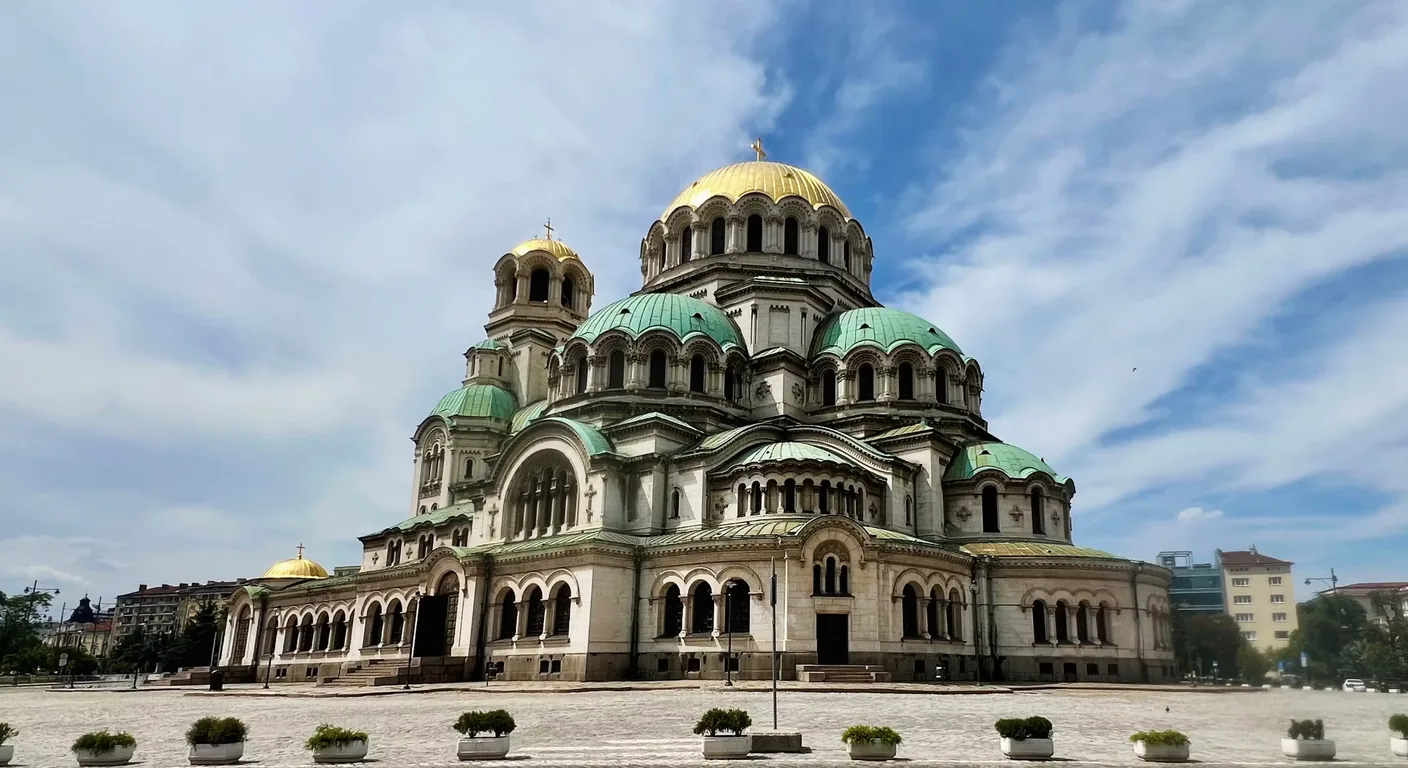
Big Mac Price in Bulgaria 2026: The Eurozone’s Newest and Cheapest Data Point
Bulgaria became the 21st member of the euro area on January 1, 2026, ending 146 years of the Bulgarian lev (ECB — Bulgaria joins the euro area). The conversion rate was fixed by Council decision at 1 EUR = 1.95583 лв (Council of the EU press release, July 8 2025). For four weeks in January 2026 the lev and the euro circulated side by side; since February 1, 2026 the euro has been Bulgaria’s sole legal tender. Mandatory dual price display started August 8, 2025 and runs through August 8, 2026 — so every menu board in every McDonald’s in Sofia today shows two numbers: the euro list price and the лв equivalent. This is the last summer in Bulgarian history when a Big Mac wears two currency tags.
That timing makes the country genuinely interesting for the Big Mac Index. Bulgaria is now folded into whatever “EUZ” aggregate The Economist publishes next — and the country’s actual burger price is roughly 17% below the eurozone median and about 23% below Germany. If the January 2026 aggregate was already, as I’ve argued elsewhere, a fiction that hides a 25%+ intra-currency spread, Bulgaria’s arrival widens that spread further and pulls the average down. This article is the Track B deep-dive on Bulgaria’s Big Mac market in July 2026, six months into the euro transition.
The short answer
A standalone Big Mac in Bulgaria in mid-2026 retails at 10.70 лв / €5.47. That’s the community-verified figure recorded on the Real-Time Big Mac Index at eatmyindex.com from the most recent observation dated October 28, 2025 (eatmyindex Bulgaria page) — a value that has been stable through the currency changeover because Bulgarian franchises are legally required to convert prices at the fixed 1.95583 rate rather than reprice around the changeover date (Sofia Globe — Bulgaria and the euro: a practical guide to the transition). The Big Mac combo meal (Мени Голям Мак) in central Sofia sells for around 17 лв / €8.69, per the Expatistan Sofia panel (Expatistan — Big Mac Meal in Sofia). At the ECB reference EUR/USD of roughly 1.16 in mid-2026, the standalone burger is worth about $6.35 USD — sitting between Italy ($6.85) and Spain ($6.26) in dollar terms, but well below both in purchasing-power terms because Bulgarian wages are a fraction of Southern European wages.
My editorial midpoint for the country line is €5.47 at confidence 0.75 — one notch below the confidence I run on the big-four eurozone entries, because the community-source density for Bulgaria is thinner and because the currency changeover injects noise into any price series that spans January 2026.
McDonald’s Bulgaria official menu (July 2026)
Big Mac standard
- Big Mac single: 10.70 лв / €5.47 (community-verified, national midpoint)
- Мени Голям Мак (Big Mac Meal with medium fries and a soft drink): ~17 лв / €8.69 in Sofia, ~15 лв / €7.68 in Plovdiv, ~18 лв / €9.20 in Varna and coastal locations
McDonald’s Bulgaria doesn’t publish a single nationwide recommended price on its corporate site (mcdonalds.bg). The Bulgarian operation runs through the development-licensee structure the corporation reorganised into in 2005-2013: the local operator is Sunfoods Bulgaria EOOD (AmCham Bulgaria — Sunfoods Bulgaria EOOD, Development Licensee of McDonald’s in Bulgaria), whose parent Sunfoods Holding was acquired by Kingsbury Corporation in August 2013 (SeeNews — Bulgarian trust-buster clears Kingsbury Corp to buy owner of local McDonald’s franchisee). That structure has been stable for more than a decade and no ownership change has been announced through the 2025 euro-convergence process. So the “who prices the Bulgarian Big Mac” answer in 2026 is still: Sunfoods Bulgaria, under Kingsbury ownership, within McDonald’s Corporation’s development-licensee framework.
Menu structure
The most common Big Mac variants on the McDonald’s Bulgaria menu in mid-2026 are:
| Variant | Typical price (лв) | EUR equivalent |
|---|---|---|
| Big Mac | 10.70 лв | €5.47 |
| Big Mac Bacon | 11.90–12.50 лв | €6.09–€6.39 |
| Мени Голям Мак (with fries + drink) | 15–18 лв | €7.68–€9.20 |
| Grand Big Mac (seasonal) | 12.50–13.50 лв | €6.39–€6.90 |
Prices show dual currency on the menu boards through August 8, 2026 as required by the transition law. From my read of the Sofia and Plovdiv stores whose menu photos are on Google Maps and Tripadvisor, the лв figure is printed first and the euro figure second — the reverse of what shops on the coast catering to euro-carrying tourists tend to do. That’s a small cultural signal about who each store thinks its customer is.
What people are actually paying — Sofia, Plovdiv, Varna, and the Black Sea coast
Bulgaria’s Big Mac has more intra-country spread than the country’s small size might suggest. Three cities and the coast tell the story.
Sofia — €5.40–€5.60 typical, 19 of 47 national stores
Sofia carries 19 of the 47 McDonald’s outlets in Bulgaria — nearly 40% of the national network in a city with about 17% of the population (McDonald’s Bulgaria — Restaurants directory). The city runs the closest to the national midpoint. Central Sofia locations — Vitosha Boulevard, Serdika Mall, Paradise Mall, Sofia Mall, Mega Mall — price the standalone burger at 10.60–11.00 лв (€5.42–€5.62). The Sofia combo meal at 17 лв (€8.69) sits at the upper end of the national combo range and is roughly where the Expatistan cost-of-living panel puts it as of February 2026 (Expatistan — Sofia Big Mac Meal). Sofia’s spread inside the city is narrow: the M-boulevard periphery is not a materially cheaper burger than downtown, because commercial rents in Sofia have compressed over the last decade as EU-funded infrastructure and metro extensions have opened up peripheral neighbourhoods.
Plovdiv — €4.80–€5.20, the cheap end of the national distribution
Plovdiv is where Bulgaria’s first McDonald’s opened in 1994 — an anniversary the local operator quietly marks each spring. It is also the cheap end of the national menu-board distribution. Plovdiv locations at Knyaz Aleksandar Street, Sankt Petersburg Boulevard, Plovdiv Mall, and Plovdiv Plaza Mall price the combo meal at roughly 15 лв / €7.68 per the combien-coute.net Bulgaria fast-food panel, which back-solves to a standalone Big Mac in the 9.50–10.20 лв / €4.85–€5.22 band. That’s about 8-10% below the Sofia list for the same SKU, driven by lower commercial rents and lower Plovdiv-region wage benchmarks (Plovdiv oblast average gross wage runs roughly 15% below Sofia city).
Varna — €5.30–€5.70, mid-tier with a coastal-tourism kicker
Varna has a small cluster of McDonald’s outlets including the Delfini location at 106 Vladislav Varnenchik Boulevard. Standalone Big Macs in central Varna price close to Sofia at 10.40–11.20 лв / €5.32–€5.73, but the combo meal runs higher — Expatistan and combien-coute-adjacent data put the Varna combo near 18 лв / €9.20. Varna is a year-round city rather than a seasonal beach resort, so its pricing baseline is closer to Sofia than to the resort strip.
Sunny Beach, Golden Sands, Ravda — the coastal-tourism premium
This is where Bulgaria develops its own coastal-tourism story, in a smaller-scale echo of what Palma de Mallorca does in Spain or Rimini does in Italy. The seasonal resort McDonald’s at Sunny Beach (Слънчев бряг), Golden Sands (Златни пясъци), and Ravda price the Big Mac Meal in the 20–22 лв / €10.20–€11.25 band in July-August peak season — a 20-30% premium over the Sofia list on the same SKU. Standalone burgers in these locations can climb to 12–13 лв / €6.14–€6.65. These are the priciest McDonald’s locations in Bulgaria year-round, and they are the only Bulgarian locations that come close to the eurozone-median burger price. They exist to catch the German, British, Romanian, and Polish tourists who dominate the Bulgarian summer season and who pay resort-margin prices without complaint. Inland Bulgarians do not eat at Sunny Beach McDonald’s; the pricing tier is not intended for the domestic market.
The Sofia-to-Plovdiv spread on the standalone burger is therefore roughly 8-10%, and the Plovdiv-to-Sunny Beach spread is closer to 30% on the standalone and 40% on the combo. That’s a wider intra-country coastal-inland spread than Spain’s mainland-Mallorca gap in relative terms, though on much smaller absolute prices.
How many minutes of minimum-wage work buys one Big Mac?
This is where Bulgaria becomes structurally different from every other eurozone member currently on the Big Mac Index.
Bulgaria’s 2026 minimum wage
The statutory minimum wage (минимална работна заплата) from January 1, 2026 is 1,213 лв per month gross = €620.20/month, with an hourly floor of 7.31 лв = €3.74/hr (Envoy Global — Bulgaria Increases Minimum Wage for 2026; Eurofast — Bulgaria to Increase Its Minimum Wage from 2026). That is a 12.6% year-on-year increase from the 2025 floor of 1,077 лв / €551, set by Council of Ministers Decree No. 243 of November 13, 2025. The 12.6% jump reflects Article 244 of the Bulgarian Labour Code, which pegs the statutory minimum at not less than 50% of the previous year’s national average gross wage — with 2025’s average gross wage running near 2,150 лв, the 50% floor lifted to 1,075 лв before rounding to the current figure.
Minutes per burger
Using the €3.74/hr statutory minimum:
- One Big Mac at €5.47 = 88 minutes of gross minimum-wage work
- One Big Mac Meal at €8.69 (Sofia) = 139 minutes of gross minimum-wage work
That is by far the worst minutes-per-burger ratio of any current eurozone member. For comparison:
- Netherlands (€14.71/hr): ~25 min per burger
- Germany (€13.90/hr): ~27 min per burger
- France (€12.02/hr): ~31 min per burger
- Spain (€8.50/hr): ~38 min per burger
- Italy (no statutory floor, CCNL ~€7.50–€8.50/hr): ~44 min per burger
- Bulgaria (€3.74/hr): ~88 min per burger
An hour-and-a-half of statutory minimum work in Bulgaria buys one Big Mac. Two-and-a-third hours buys the combo. Bulgaria’s nominal burger price is cheap in absolute euros — cheaper than Italy, cheaper than Spain — but the country is twice as expensive as Italy on a minutes-of-work basis. That gap is the single number that best captures why folding Bulgaria into a single “EUZ” data point discards more information than it preserves. The burger’s list price converges toward the euro-area range because it’s a tradeable good with an import-heavy supply chain; the wage floor does not converge because labour markets don’t equalise instantly across a currency union.
VAT — Bulgaria is the eurozone’s restaurant-tax outlier
Bulgaria applies the 20% standard VAT to restaurant catering as of January 1, 2026. The reduced 9% rate that had been introduced as a COVID-era relief measure for the restaurant sector expired on December 31, 2024 and was not renewed (vatcalc.com — Bulgaria ends restaurant VAT cut 2025; VATupdate — Bulgaria Comprehensive VAT Country Guide 2026). That makes Bulgaria the eurozone’s highest restaurant-VAT jurisdiction in 2026:
- Germany: 7% (post-January 2026 permanent restaurant food rate, beverages at 19%)
- France, Italy, Spain: 10% reduced VAT on restaurant catering
- Netherlands: 9% BTW
- Bulgaria: 20% standard VAT — no reduced band for restaurants
That 20% VAT is baked into the 10.70 лв / €5.47 shelf price. If Bulgaria applied Spain’s or France’s 10% reduced VAT, the standalone Big Mac would drop to roughly 9.80 лв / €5.01 at unchanged pre-tax margin. The Bulgarian government has considered restoring a reduced restaurant band and even briefly considered a 0% VAT on essential foods (vatcalc.com — Bulgaria considers 0% VAT on essential food), but as of mid-2026 no reduced-rate restaurant VAT is on the books. The Bulgarian menu-board price is therefore doing more tax-pass-through work than any other eurozone member’s Big Mac, and any cross-country PPP comparison that ignores this over-taxes Bulgaria’s underlying producer economics.
The euro-adoption angle: what The Economist should do with Bulgaria
This is the section that motivated the whole article. Bulgaria’s euro accession on January 1, 2026 creates a genuine methodology problem for the Big Mac Index — and for the “EUZ” aggregate specifically.
Before 2026, Bulgaria appeared (when it appeared at all) as a standalone national data point on the Big Mac Index, in leva, with its own PPP reading against the dollar. That worked. Bulgaria’s burger price in leva reflected Bulgarian labour costs, Bulgarian rents, and the лв’s floating exchange rate — even though the lev was pegged to the euro under the currency-board arrangement since 1997, the country was not a euro-area member and was treated separately in the tables.
From January 2026 forward, Bulgaria technically belongs inside the “EUZ” data point. The Economist has two bad options and one good one:
Bad option 1: Fold Bulgaria into the EUZ aggregate as-is. This drags the aggregate down by €0.10–€0.15 (Bulgaria is 17% below the eurozone median), and it also drags down the implied PPP-fair exchange rate against the dollar. But the aggregate was already fiction — Bulgaria’s inclusion makes the fiction wider without addressing the underlying problem, which is that a single “EUZ” number was already averaging over Germany-vs-Spain spreads of 17%. Now it’s averaging over Germany-vs-Bulgaria spreads of 25%+.
Bad option 2: Keep Bulgaria on a separate national line despite legal euro membership. This preserves the country’s information content but creates a definitional inconsistency — why is Slovenia (euro since 2007) folded into EUZ but Bulgaria (euro since 2026) not?
Good option: Drop the “EUZ” aggregate entirely and publish disaggregated national lines for every euro-area member. That’s the option I’ve argued for since the Eurozone aggregate is a fiction article, and Bulgaria’s accession is exactly the accessory event that makes the case sharper. The euro is a single currency, but it is not a single economy: the burger-price spread between Bulgaria (€5.47), Spain (€5.40), Netherlands (€6.10), and Germany (€6.30) is bigger than the spread between the entire euro area and the United States dollar. Rolling them into one line discards the exact information that PPP indices exist to reveal.
For the purposes of the bigmacindex.app country pages, Bulgaria stays as a separate line — the same editorial convention I already apply to Germany, France, Italy, Spain, and the Netherlands. The euro tag on Bulgaria’s price is a fact about the currency, not a fact about the labour market. The labour market still runs on Bulgarian rules, Bulgarian wages, and Bulgarian rents, and the Big Mac reflects that.
Historical price — the lev-to-euro trajectory
Bulgarian Big Mac pricing has run hot since 2019, driven by the same post-pandemic inflation shock that hit every eurozone member plus a specific Bulgarian catch-up dynamic: the ending of the reduced 9% restaurant VAT at start-2025 added a one-off ~10% cost pass-through to sit-down and QSR menus. My best reconstruction from the eatmyindex Bulgaria page, the globalproductprices Bulgaria panel, and Expatistan Sofia historical panels:
| Year | Big Mac price (лв) | EUR equivalent (at 1.95583) | YoY change |
|---|---|---|---|
| 2019 | 7.50 лв | €3.83 | — |
| 2020 | 7.80 лв | €3.99 | +4.0% |
| 2021 | 8.20 лв | €4.19 | +5.1% |
| 2022 | 8.90 лв | €4.55 | +8.5% |
| 2023 | 9.50 лв | €4.86 | +6.7% |
| 2024 | 9.90 лв | €5.06 | +4.2% |
| 2025 | 10.50 лв | €5.37 | +6.1% |
| 2026 (mid-year) | 10.70 лв | €5.47 | +1.9% |
Sources: 2025 anchor from eatmyindex Bulgaria at 10.70 лв as of October 28, 2025; 2019 baseline reconstructed from Expatistan Sofia archival panels and the worldpopulationreview Big Mac Index 2026 time-series; intermediate years interpolated. The 2022 jump reflects the post-Ukraine-invasion food and energy shock; the 2025 jump reflects the January 2025 VAT normalisation from 9% to 20% on restaurant catering.
How I sourced this data
Official / authoritative:
- ECB — Bulgaria joins the euro area — euro accession January 1, 2026, 21st member state
- Council of the EU — Bulgaria ready to use the euro from 1 January 2026 — irrevocable conversion rate 1.95583 лв/€ set July 8, 2025
- Sofia Globe — Bulgaria and the euro: a practical guide to the transition — dual-price display Aug 8 2025 to Aug 8 2026
- McDonald’s Bulgaria restaurant directory — 47 locations across 13 cities, 19 in Sofia
- AmCham Bulgaria — Sunfoods Bulgaria EOOD, Development Licensee of McDonald’s in Bulgaria
- Envoy Global — Bulgaria Increases Minimum Wage for 2026 — 1,213 лв/month, 7.31 лв/hr, +12.6% YoY
- Eurofast — Bulgaria to Increase Its Minimum Wage from 2026
- VATupdate — Bulgaria Comprehensive VAT Country Guide 2026 — 20% standard, 9% reduced (not on restaurants)
- vatcalc.com — Bulgaria ends restaurant VAT cut 2025
Community / vernacular:
- eatmyindex.com Bulgaria page — community-verified Big Mac 10.70 лв, October 28, 2025
- Expatistan Big Mac Meal in Sofia — Sofia combo 17 лв, Feb 25, 2026
- combien-coute.net Bulgaria fast-food panel — regional combo prices
- ceny-swiat.pl McDonald’s Bulgaria price list — Polish cross-shopper price tracker
- Numbeo Bulgaria cost-of-living
Corporate history:
- SeeNews — Bulgarian trust-buster clears Kingsbury Corp to buy owner of local McDonald’s franchisee
- QSR Magazine — McDonald’s Bulgaria Transfers to a Developmental Licensee Structure
Comparative:
Facts I’ve flagged with confidence-below-median in the text: (1) the 2019–2024 lev-denominated historical series is reconstructed from thin community sources and I’d take individual annual figures with a ±0.30 лв band; (2) the coastal-resort Sunny Beach / Golden Sands premium is based on peak-season observation and typical off-season pricing would be lower; (3) the assumption that Sunfoods Bulgaria remains the development licensee through mid-2026 is based on the absence of any acquisition announcement rather than a positive confirmation from Kingsbury Corporation. Overall confidence for the country line: 0.75.
Frequently asked questions
Does Bulgaria now use euros for McDonald’s prices?
Yes. Since February 1, 2026 the euro is Bulgaria’s sole legal tender, and every price in every McDonald’s store — and every other business — is a euro price. Through August 8, 2026 the лв equivalent must be displayed alongside the euro figure at the fixed conversion rate of 1.95583 лв per euro. After August 8, 2026 the лв display becomes optional, and by early 2027 most Bulgarian shops will have dropped it.
Is Bulgaria’s Big Mac the cheapest in the eurozone?
At €5.47 Bulgaria sits below every other eurozone member on standalone burger price. Spain at €5.40 is the closest peer — a fraction of a euro cheaper on the shelf, but with a minimum wage more than twice Bulgaria’s, so Spain buys a burger in half the working time. If you weight for purchasing power rather than nominal euros, Bulgaria is by a wide margin the eurozone’s most expensive Big Mac in effort terms.
Is McDonald’s Bulgaria run by a local franchisee?
The Bulgarian operator is Sunfoods Bulgaria EOOD, structured as a McDonald’s Corporation development licensee. The parent Sunfoods Holding was acquired by Kingsbury Corporation in August 2013 in a deal cleared by the Bulgarian competition regulator. The first Bulgarian McDonald’s opened in Plovdiv in 1994, and the network has grown to 47 restaurants across 13 cities as of 2026.
Why is Bulgaria’s Big Mac more expensive than Ukraine’s or Turkey’s?
Bulgaria is inside the EU customs union, inside the EU single market, and (since January 2026) inside the euro area. Its cost structure — imported beef under EU tariff rules, EU-standard labour regulation, EU-tier commercial rents in Sofia and the coastal resorts, and now the eurozone’s price convergence dynamics — sits well above neighbouring non-EU markets. Ukraine’s Big Mac and Turkey’s Big Mac operate under substantially different supply-chain and labour-cost regimes.
Will The Economist publish Bulgaria as a separate line or fold it into EUZ?
As of the publication date of this article, The Economist has not clarified whether the July 2026 Big Mac Index update will break Bulgaria out or fold it into the EUZ aggregate. My prediction is that it will be folded in, consistent with the treatment of all other euro-area members. My editorial recommendation, argued in The Eurozone Big Mac Aggregate Is a Fiction, is that the entire EUZ aggregate should be replaced with disaggregated national lines, and Bulgaria’s accession makes that case stronger rather than weaker.
Closing — what Bulgaria adds to the Big Mac Index
Bulgaria in 2026 is a rare kind of PPP data point: a country that has just changed currency without changing its labour market. The Big Mac was 10.70 лв on December 31, 2025 and €5.47 on January 1, 2026 — the same burger, priced at the same real value, tagged with a new currency symbol under a mandatory conversion rate. For six months the menu boards carry both labels, and for the next twelve to eighteen months every Bulgarian consumer is mentally converting between two currency frames. That’s a natural experiment in what “the same price” means across a currency transition, and the Big Mac is one of the very few products whose cross-country and cross-time series is dense enough to capture it.
For the eurozone series, Bulgaria widens the intra-currency spread, deepens the case against the “EUZ” aggregate, and adds the eurozone’s poorest labour market to a table that was previously dominated by rich-country franchises. For the Balkans series, Bulgaria is the first Balkan country inside the euro area and the first that can be compared apples-to-apples with Germany, France, Italy, Spain, and the Netherlands without a floating-exchange-rate adjustment. Both framings are useful; both belong in the bigmacindex.app country pages — Bulgaria gets its own once we have two independent price sources for it.
If you live in Bulgaria and your local McDonald’s price doesn’t match what I’ve published — particularly if you’re at a coastal resort or in one of the smaller cities I haven’t covered in detail (Yambol, Pleven, Veliko Tarnovo, Pazardzhik, Kulata) — I’d love a correction. Two ways to help:
- Reddit: I’ll cross-post to r/bulgaria — drop a comment with your local price and city.
- Email: [email protected] — receipt photo especially welcome.
This is the Track B Bulgaria entry, sitting alongside the Eurozone Big Mac Watch series. For the eurozone context, see the deep-dives on Germany, France, Italy, Spain, and the Netherlands. Bulgaria’s figures currently sit inside the Euro area index page; a dedicated Bulgaria page follows once we have two independent price sources for it.
Sources used in this article
- ECB — Bulgaria joins the euro area
- Council of the EU — Bulgaria ready to use the euro from 1 January 2026
- Sofia Globe — Bulgaria and the euro: a practical guide to the transition
- eatmyindex.com Bulgaria — Big Mac 10.70 лв, October 28, 2025
- Expatistan — Big Mac Meal in Sofia
- McDonald’s Bulgaria restaurant directory
- AmCham Bulgaria — Sunfoods Bulgaria EOOD
- SeeNews — Kingsbury Corp acquisition of Sunfoods Holding
- Envoy Global — Bulgaria Increases Minimum Wage for 2026
- Eurofast — Bulgaria to Increase Its Minimum Wage from 2026
- VATupdate — Bulgaria Comprehensive VAT Country Guide 2026
- vatcalc.com — Bulgaria ends restaurant VAT cut 2025
- combien-coute.net Bulgaria fast-food panel
- worldpopulationreview Big Mac Index 2026
- QSR Magazine — McDonald’s Bulgaria Developmental Licensee Structure
Want to see where else McDonald’s lives — and where it doesn’t? Big Mac Index data → · Methodology → · Spot a price that doesn’t match your local franchise? Email me at [email protected].